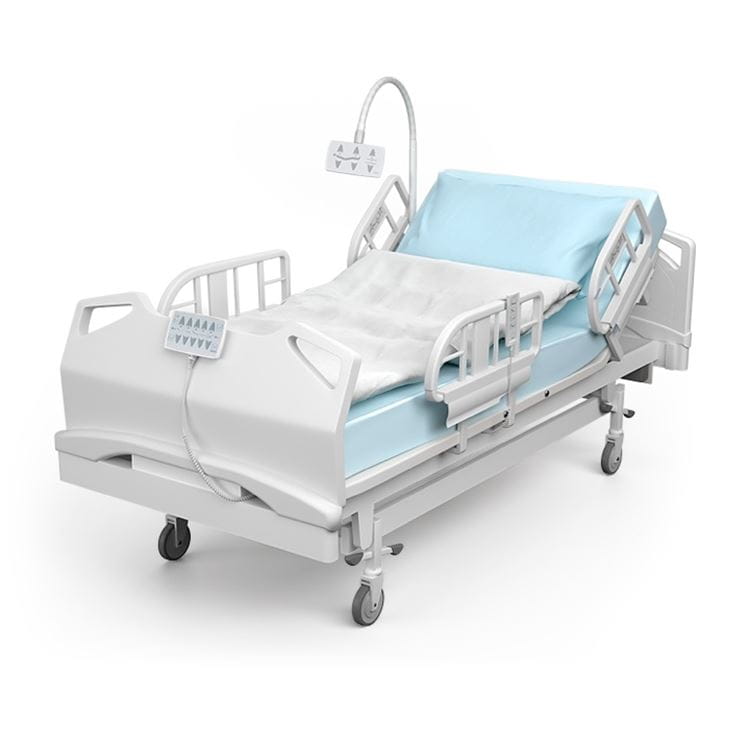
TRA3-01 Electric Bed
R23,332.00
. Manual Hospital Beds
- Features: Adjustable via hand cranks for height, head, or foot elevation.
- Uses:
- Ideal for low-budget healthcare facilities.
- Suitable for patients who don’t need frequent adjustments.
- Example: Basic patient recovery or long-term care in rural settings.
2. Semi-Electric Beds
- Features: Uses electric motors for head and foot adjustments but manual cranks for height.
- Uses:
- For patients needing frequent position changes but with limited budget constraints.
- Common in rehabilitation centers.
3. Fully Electric Beds
- Features: Fully motorized for head, foot, and height adjustments via a remote.
- Uses:
- For critically ill or bedbound patients requiring minimal caregiver effort.
- Suitable for intensive care units (ICUs).
4. ICU Beds
- Features: Advanced features such as cardiac chairs, built-in scales, and multiple position adjustments.
- Uses:
- For critically ill patients needing constant monitoring and easy repositioning.
- Allows Trendelenburg and Reverse Trendelenburg positions for better blood flow and respiration.
5. Bariatric Beds
- Features: Wider frame, reinforced structure, and higher weight capacity (300–500kg).
- Uses:
- Designed for obese patients to ensure comfort and safety.
- Found in bariatric units or general wards.
6. Pediatric Beds
- Features: Smaller size, with safety side rails and colorful designs.
- Uses:
- For infants and young children in pediatric wards.
- Prevents falls while ensuring comfort for children.
7. Adjustable Beds (Homecare Beds)
- Features: Fully adjustable with options like massage and memory functions.
- Uses:
- For home care of elderly or bedbound patients.
- Provides comfort and ease of use for caregivers.
8. Low Beds
- Features: Can be lowered very close to the ground to prevent injuries from falls.
- Uses:
- For elderly or confused patients prone to falling.
- Common in dementia care units.
9. Fowler Beds
- Features: Specifically designed to position the patient in Fowler’s position (semi-upright at 45-60°).
- Uses:
- For patients with respiratory issues or during feeding.
- Suitable for post-surgery recovery.
10. Stretchers (Transport Beds)
- Features: Lightweight, with wheels and adjustable headrests.
- Uses:
- For transferring patients within the hospital (e.g., to the operating room or imaging departments).
- Emergency situations in ambulances.
11. Air-Fluidized Beds
- Features: Uses air circulation and beads to reduce pressure on the body.
- Uses:
- For patients with severe pressure ulcers or burns.
- Found in burn units and advanced wound care settings.
12. Anti-Decubitus Beds (Alternating Pressure Beds)
- Features: Alternating air pressure to reduce the risk of bedsores.
- Uses:
- For immobile or bedridden patients at risk of pressure ulcers.
- Suitable for long-term care.
13. Gatch Beds
- Features: Traditional manual hospital bed with three movable sections.
- Uses:
- For basic patient care in facilities without access to electricity.
14. Lateral Rotation Beds
- Features: Automatically turns the patient from side to side.
- Uses:
- For patients with mobility issues or at high risk of bedsores.
- Reduces the need for manual turning by caregivers.
. Manual Hospital Beds
- Features: Adjustable via hand cranks for height, head, or foot elevation.
- Uses:
- Ideal for low-budget healthcare facilities.
- Suitable for patients who don’t need frequent adjustments.
- Example: Basic patient recovery or long-term care in rural settings.
2. Semi-Electric Beds
- Features: Uses electric motors for head and foot adjustments but manual cranks for height.
- Uses:
- For patients needing frequent position changes but with limited budget constraints.
- Common in rehabilitation centers.
3. Fully Electric Beds
- Features: Fully motorized for head, foot, and height adjustments via a remote.
- Uses:
- For critically ill or bedbound patients requiring minimal caregiver effort.
- Suitable for intensive care units (ICUs).
4. ICU Beds
- Features: Advanced features such as cardiac chairs, built-in scales, and multiple position adjustments.
- Uses:
- For critically ill patients needing constant monitoring and easy repositioning.
- Allows Trendelenburg and Reverse Trendelenburg positions for better blood flow and respiration.
5. Bariatric Beds
- Features: Wider frame, reinforced structure, and higher weight capacity (300–500kg).
- Uses:
- Designed for obese patients to ensure comfort and safety.
- Found in bariatric units or general wards.
6. Pediatric Beds
- Features: Smaller size, with safety side rails and colorful designs.
- Uses:
- For infants and young children in pediatric wards.
- Prevents falls while ensuring comfort for children.
7. Adjustable Beds (Homecare Beds)
- Features: Fully adjustable with options like massage and memory functions.
- Uses:
- For home care of elderly or bedbound patients.
- Provides comfort and ease of use for caregivers.
8. Low Beds
- Features: Can be lowered very close to the ground to prevent injuries from falls.
- Uses:
- For elderly or confused patients prone to falling.
- Common in dementia care units.
9. Fowler Beds
- Features: Specifically designed to position the patient in Fowler’s position (semi-upright at 45-60°).
- Uses:
- For patients with respiratory issues or during feeding.
- Suitable for post-surgery recovery.
10. Stretchers (Transport Beds)
- Features: Lightweight, with wheels and adjustable headrests.
- Uses:
- For transferring patients within the hospital (e.g., to the operating room or imaging departments).
- Emergency situations in ambulances.
11. Air-Fluidized Beds
- Features: Uses air circulation and beads to reduce pressure on the body.
- Uses:
- For patients with severe pressure ulcers or burns.
- Found in burn units and advanced wound care settings.
12. Anti-Decubitus Beds (Alternating Pressure Beds)
- Features: Alternating air pressure to reduce the risk of bedsores.
- Uses:
- For immobile or bedridden patients at risk of pressure ulcers.
- Suitable for long-term care.
13. Gatch Beds
- Features: Traditional manual hospital bed with three movable sections.
- Uses:
- For basic patient care in facilities without access to electricity.
14. Lateral Rotation Beds
- Features: Automatically turns the patient from side to side.
- Uses:
- For patients with mobility issues or at high risk of bedsores.
- Reduces the need for manual turning by caregivers.
Related products